
SB 1383 – Residential
Did you know that organic waste makes up most of the material sent to landfills in California?
Great news, your new food waste recycling program went into effect in 2024!
Reducing Food Waste in Landfills Limits Greenhouse Gas Emissions!
The new state law, SB 1383, requires all residents to recycle their organics weekly.

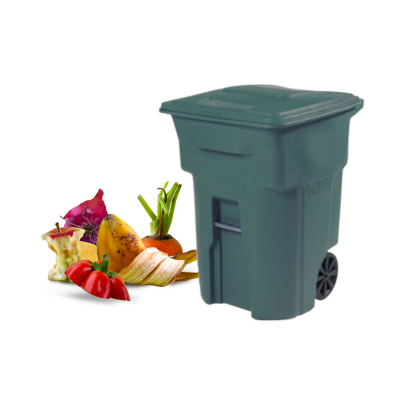
Put Green Waste and Food Scraps in the Right Place!
One of the simplest ways we can fight climate change is by recycling organic waste.
Our landfills in California are composed of over 50% organic waste: food, green waste, and food-soiled paper.
Organic waste emits 20% of the state’s methane, a climate super pollutant 84 times more potent than carbon dioxide.
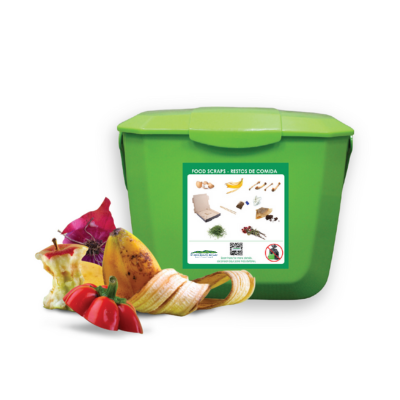
Use Your Kitchen Pail for Food Scraps
To make the most of your cooking and cleanup, use your kitchen pail to collect food scraps. Once the pail is full, empty its contents into your green cart. Every residential home received a kitchen pail at the start of the program. For new residents, we will deliver a kitchen pail when the service starts.
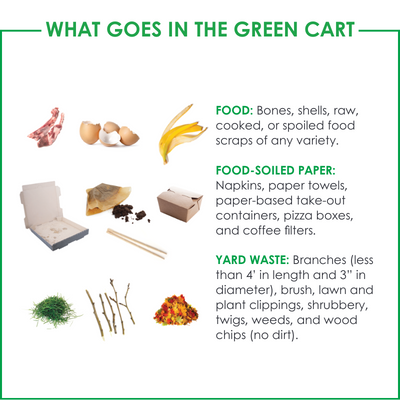
Composting is Easy!
How it Works:
- Collect food scraps in a container.
- Empty the contents into your green organics cart.
- Set out your organics cart for weekly pickup.
Mt. Diablo Resource Recovery organics trucks transport separated green waste, food scraps, and food-soiled paper to our Pittsburg facility for preprocessing. We then transport the material to our partnering compost facility for the final step of turning the materials into soil-enriching compost.
What is Senate Bill (SB) 1383?
SB 1383 is a recent state law that requires residents to recycle their organics weekly.
The State has committed to reducing greenhouse gas emissions, improving human health, and creating clean jobs that support resilient local economies. Implementing the statewide plan under SB 1383 will reduce short-lived, harmful superpollutants with significant warming impacts and is essential to achieving California’s climate goals.
Organic waste, such as food scraps, yard trimmings, paper, and cardboard, makes up half of what Californians send to landfills. Organic waste in landfills emits 20% of the State’s methane, a climate super pollutant 84 times more potent than carbon dioxide.
The law seeks to achieve a 75% reduction in the disposal of organic waste.
Frequently Asked Questions
For additional support for SB 1383, visit our FAQs page.
SB1383 Insert Postcard (English)
SB1383 Insert Postcard (Spanish)
How to Use Your Kitchen Pail Flyer (English & Spanish)
Newsletter – Organics Recycling Edition (English)
Newsletter – Organics Recycling Edition (Spanish)
SB1383 Post Card (English)
SB1383 Insert Postcard (English)
SB1383 Insert Postcard (Spanish)
How to Use Your Kitchen Pail Flyer (English & Spanish)
Newsletter – Organics Recycling Edition (English)
Newsletter – Organics Recycling Edition (Spanish)
SB1383 Post Card (English)
SB1383 Insert Postcard (English)
SB1383 Insert Postcard (Spanish)
How to Use Your Kitchen Pail Flyer (English & Spanish)
Newsletter – Organics Recycling Edition (English)
Newsletter – Organics Recycling Edition (Spanish)